 |
Banks Service Station |
|
|
"Classic and Sportscar" magazine..
The following article featured in the November 1992 edition of Classic and
Sportscar magazine and is reproduced with their kind permission.
All text and images © Classic and Sportscar 1992. All rights reserved
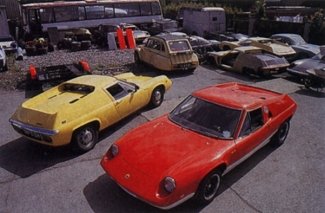
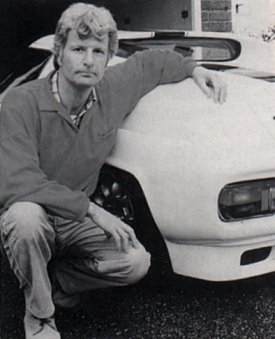
Whether or not a Banks Europa appeals to you .depends very much on what camp you occupy. If you're a purist for whom a Lotus Europa must be a Lotus Europa correct in every detail, you may well appreciate the Banks car but it won't outrank the pukka job. That's fine and Richard Winter's Banks Service Station pan be still be of service to you as one of the leading Europa Specialists in the country He's got a yardful of cars covering most Europa models, all of which are ripe for restoration to authentic original condition. He so has no shortage of the spares with which to do the job. That said, early Europas suffered a few problems which didn't endear them to sixties enthusiasts so they'll definitely pose problems in the nineties. Even so, a well restored and well set up late model car will still be a performance delight more than capable of embarrassing nineties performance machinery. Indeed, Banks Service Station has carried out numerous ground-up restorations and owners are more than happy with the results. It just depends on how authentic you want it to be. Richard Winter started his Lotus business fifteen years ago and it soon became evident that the greatest problem confronting the cars related to their corrosion-prone chassis. Straight Lotus replacement units are available but Richard prefers to build cars on his own tubular backbone replacement frame. It's stronger, more durable and significantly stiffer. From creating his own chassis, it was a short hop to improving the suspension, especially at the back, and once it has been sampled on the road, most customers opt for Richard's long wishbone conversion. From there, the identity crisis becomes more serious. The original Renault 1600cc engine was no star performer but it is amenable to tuning. How far can you go before it ceases to be what it's supposed to be? Does fuel injection invalidate its Lotus Identity? As well as a problem for the Lotus fancier, it also posed a problem for Lotus itself. The company wasn't too pleased a original cars being restored with alternative chassis and engine and still badged as Europas. The problem became more complex when Banks Service Station began producing replacement bodies both in part for restoration as well as in whole for complete Banks cars. Happily, the snags have been overcome through dialogue between Lotus and Banks Service Station and while Ban cars still carry a Lotus bonnet badge to denote their origin, they also carry a side badge proclaiming 'Europa. Re-engineered by Banks' which increasingly denotes their more modern and capable pedigree. Any car that leaves Richard Winter's Southport premises starts out as a genuine Europa, of which about a dozen cars in various stages of decay and neglect populated the yard at the time of our visit. Should you be in the market for a Europa the other places to look as most cars will need a degree of work before they are up to road standard, makes sense, if only for the Sake of convenience, to head Southport. In respect of every car the company buys, every last component that can be salvaged is stripped and the residue, no matter how great a proportion of the car, is scrap.
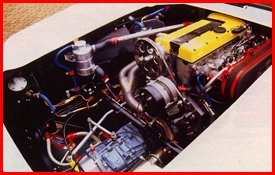
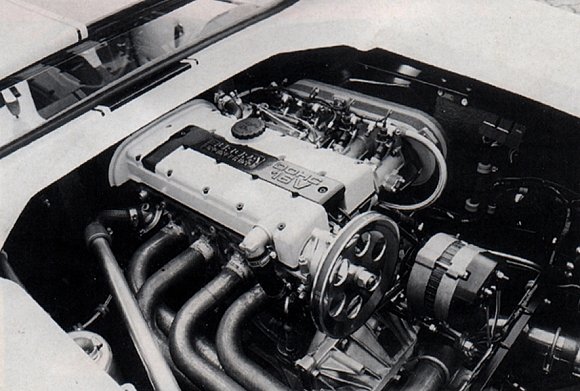
the front the original Triumph Herald uprights are retained and fitted to Banks replacement round tube wishbones. The car carries a non-adjustable anti-roll bar and the Herald-derived rack and pinion steering. The greatest changes take place at the back where the Europa's heavy box-section trailing arm arrangement is junked in favour of Banks' own wide double wishbone installation with a fabricated steel upright. AVO coilspring dampers are used all round. In the engine bay the choice is yours. The company can overhaul the original Renault 16 unit, they can fit fuel injection to it, you can have a Lotus twin-cam, a Vauxhall 16-valve, a V6 or even a transverse engine to create the ultimate mid-engined Europa.
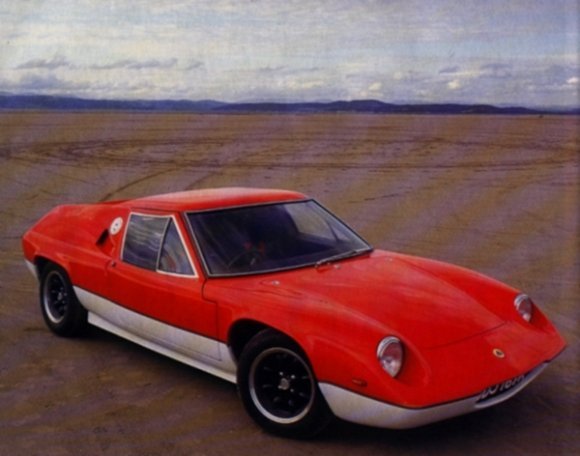
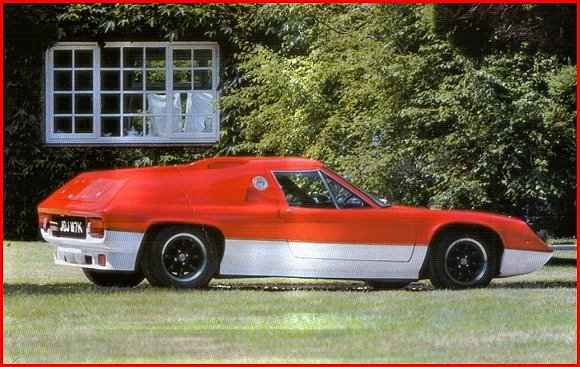
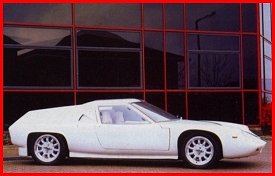
The car provided for the day housed a Vauxhall 1600cc, SOHC motor breathing through twin 40DCOE Dellortos and blowing through a Banks tubular exhaust. Power output was a pleasant 124bhp which, with an all-up weight of just 1500lbs, gives a power to weight ratio of 185bhp per ton. Bodywork also provides choices. You can have the original Sl shape, the later, cutaway sided 47 shape or even go the whole hog and duplicate the lines of the race-bred 62. The body can be a repaired original, a completely new Banks body or a mixture of both. The test car carried a complete Banks 47 body. So what ties it to the original Lotus?
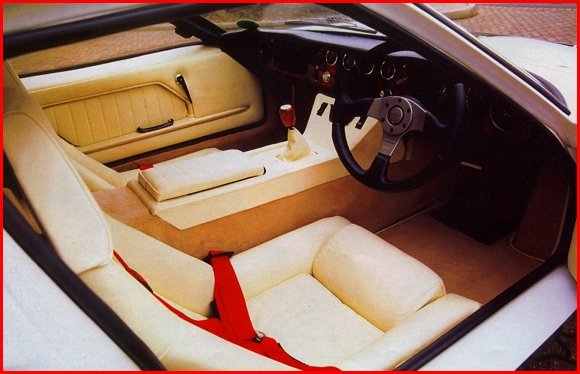
Well, the interior has the original Europa seats, dashboard, instruments and trim. It has the front uprights, the steering rack and column, bumpers, brightwork and a few other bits and pieces. Is it a Europa? Well, you could argue over that one all night long. Suffice to say it looks like a Europa, and if you are drawn to a Europa for its shape, it'll do. If it drives half as well as you expect it to, you won't really care what it is. The badge on the bonnet says Lotus.
SMA908H looks flawless. Its metallic light-blue paint is perfect and there is a deep glossshine on every panel. The shut lines are militarily uniform, the Mini-lites are polished, the glass carries deep reflections and it looks for all the world like a brand-new car, but it's not. I last saw this car blatting round Mallory Park at Warp Factor Nine and before that I saw it blasting over Morocco's Atlas Mountains throwing stones and grit in every direction as I chased it on the Liege-Agadir-Liege endurance event in 1997. Believe me, it's been well used. Open the door and that unique and unmistakeable Europa interior looks very familiar. The deep, laid-back seats providing an almost supine driving position, the polished walnut fascia, padded centre-tunnel, tall gear-lever; it's all there along with a Brantz rally meter and a pair of four-point harnesses as evidence of its exploits. There's also a modern stereo for those more relaxed periods behind the wheel. Europas are reportedly awkward to get into but I found this car easy for my six foot plus frame. The fact that Richard Winter is six foot four obviously helps. You sink into the seat. Europa seats are upholstered onto an 18 gauge sheet steel bucket that forms part of the side impact defences and, as well as feeling safe, you also feel supremely comfortable and well supported. There's good space in the footwell around the delicate pedals and, ahead of you, the dashboard is spread across the full width of the car. It's a wee bit sixties higgledy-piggledy with switches and warning lights interspersed with the full instrumentation and the push-pull handbrake on the passenger side of the tunnel, but then that's part of the charm of a sixties car where 'character' is a euphemism for a slight lack of design discipline. I particularly liked the suede-rimmed 14" steering wheel and the sheer excellence of the driving position. As well as providing comfort and support it also creates relaxation and confidence. Twist the key and the Vauxhall 1600 a foot behind you fires up without much drama. The exhaust is surprisingly subdued and as test the controls everything feels ultra-light and beautifully responsive. Vision isn't the problem I anticipated either. Certainly, rear three-quarter stuff has the potential to be awkward but the mirrors are pretty good and there's a good view over the flat rear deck.
On the move the car feels light and obedient. The Avos create an excellent ride which belies the 'raw' reputation of early SIs and through town it feels pretty mundane. Were it not for the unique driving position with your elbows perfectly supported on the tunnel and the support in the door trim, you could be driving anything, but put your foot down and its character changes.
You don't need big power to create a hugely satisfying driving experience. If you're working out a spec with Richard Winter and the price is looking high by the time you've got your Vauxhall 2-litre 16-valve, four-wheel disc brakes, twin master-cylinders and Balance bar fitted, you could always go for a drive in this car , as it's just superb. The intricately wrought mechanical change is a delight. Plop it in first, balance the beautifully weighted pedals and give it some gas and it's away. It'll easily hit 7,000 all the way up Renault's well spaced five-speed, the real urge coming from around 3,000. From there on up you just get a smooth surge of power accompanied by an increasingly strident wail from the tail. In a straight line the car is unerringly stable, the wide rear wishbones contributing a great deal to its rock solid composure. It's all the more surprising as the rack and pinion has but 1 & ¾ turns between directional extremes, but it never feels the least bit twitchy. 'Smoothness and mechanical Come the corners and 1500lbs is no problem for the disc-drum brakes, the middle stump requiring just the merest caress to wipe off speed in an instant. The steering is hyper-light and full of feel in its small arc of movement while grip from both ends is prodigious. Tip it into a turn and the front end darts in with all the confidence in the world. There's negligible understeer and minimal body roll. You can push it round hard with never a murmur from the back and, if you lift off mid-way through, the transition to oversteer is very gentle and easily controllable. In addition to the car's excellent dynamic ability, Vauxhall's SOHC engine is a cracker too. It thrives on revs, loves you to really use the gears and rewards correct selection with an excellent power band and bags of torque. It's actually a pretty delicate car to drive hard. Smoothness and mechanical sympathy achieve far better results than caveman tactics and the car feels more responsive, more nimble and better balanced for the effort. Over an authentic Europa, the Banks car is stiffer, promoting improved and more precise handling as it's made to work. That's not to denigrate original cars; more to illustrate that automotive engineering has learned a few new tricks since the Europa's appearance in 1966. Indeed, Richard Winter sees his cars as the natural evolution of what was a well designed and thought out car in its day. He loves Europas. I loved this Europa and I couldn't give two hoots what's written on the bonnet or the sides. If you fancy a Europa, there are plenty of cars about but I reckon a Banks car will be well worth driving before you make your final decision. Price? Well, that's a tricky one as it depends on the condition of the car you buy and what specification you go for. However, this Lotus 47 bodied car with the Vauxhall SOHC engine represents about £20,000 on the hoof. It may not be a true classic in the purest sense of the word but then you don't have to spend every weekend pandering to its various ailments either. Really, it offers the best of both worlds.
|